Low-maintenance plants still need the right spot
A plant can be drought tolerant and still fail if it is installed in the wrong place. West-facing walls, reflected heat from block walls, poor drainage, missing drip emitters, and overcrowded beds can stress even tough desert plants. Before installing anything, homeowners should look at sun exposure, mature size, water access, and how the plant will look from the street.
- Full sun versus afternoon shade
- Drip irrigation reach
- Mature height and width
- Distance from walls, windows, and walkways
- How much trimming the plant will need later
Good plant choices for Phoenix-area curb appeal
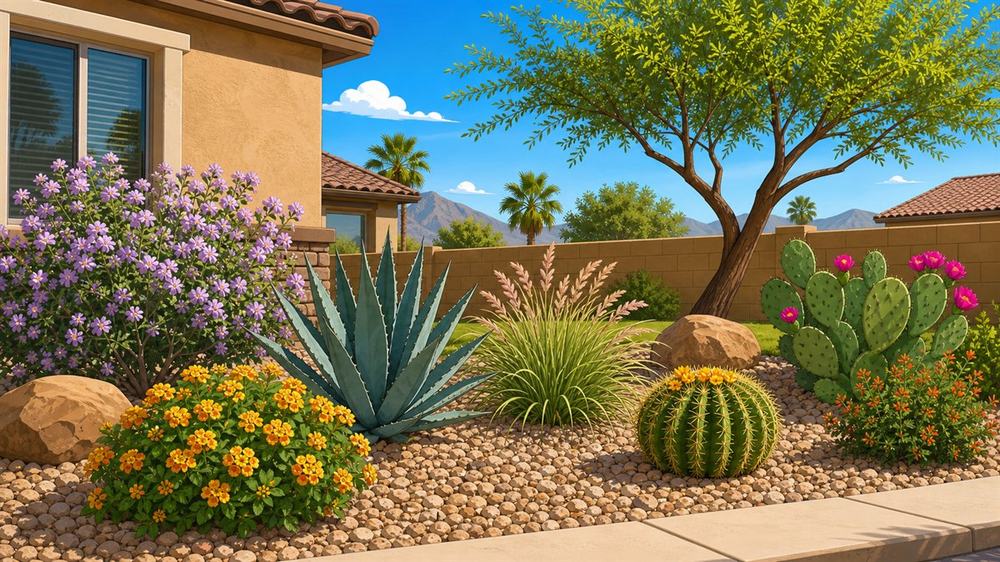
Many West Valley homes do well with a mix of desert shrubs, accent plants, cactus, and small trees. Options like Texas sage, lantana, agave, desert willow, palo verde, mesquite, vitex, and barrel cactus can create curb appeal without demanding constant water or weekly trimming. The exact choice depends on the yard and the homeowner's comfort with thorns, blooms, shade, and cleanup.
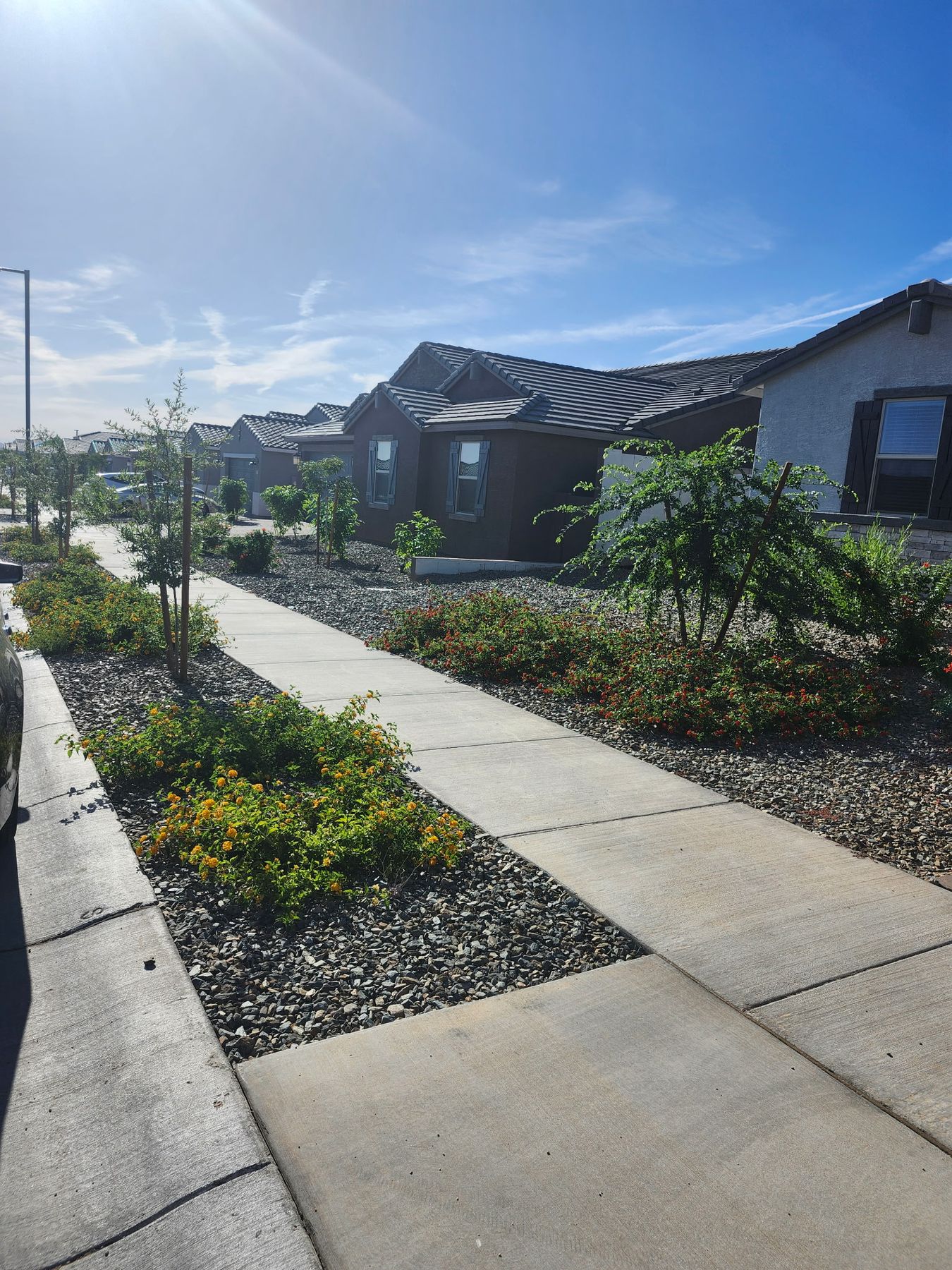
Avoid planting too close together
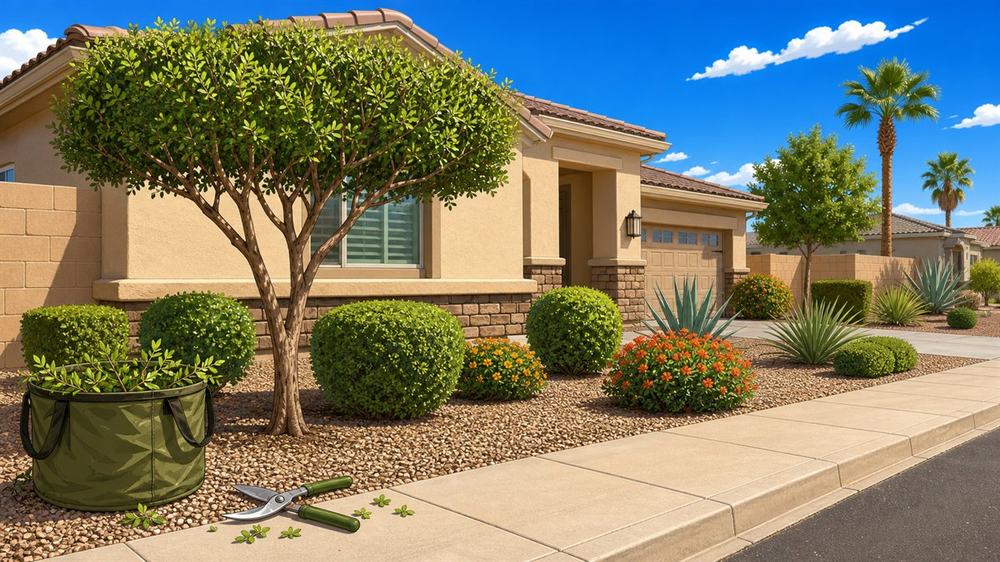
One of the most common mistakes in residential landscaping is installing small nursery plants too close because the bed looks empty on day one. In a year or two, the same plants may crowd each other, block walkways, hide windows, or require constant trimming. Low-maintenance landscaping starts with realistic spacing.
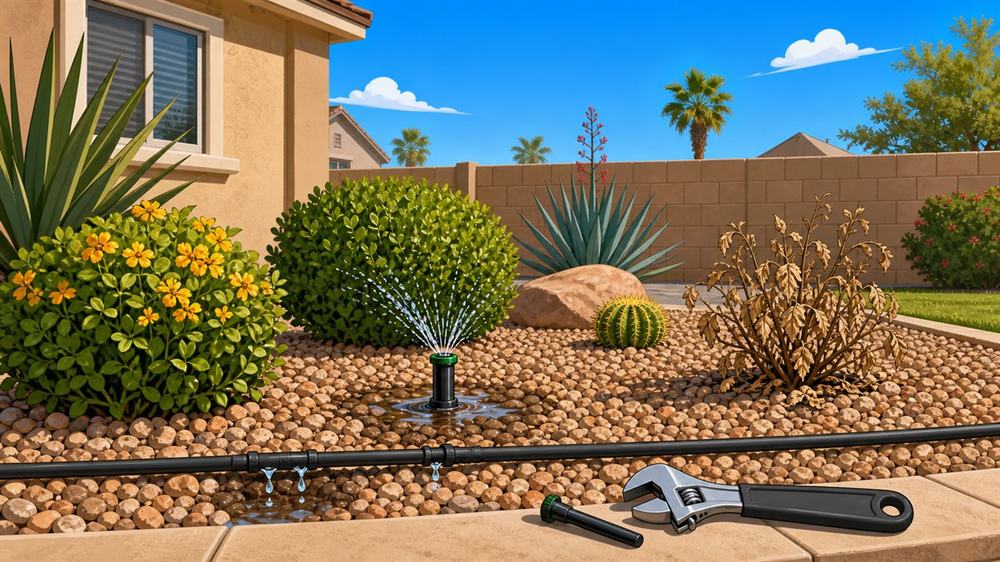
Dead plants may be an irrigation warning
If one plant dies, the first question should be whether it was getting water. A clogged emitter, broken drip line, or poor timer schedule can kill a new plant quickly in Glendale, Goodyear, Buckeye, Surprise, Litchfield Park, or Avondale. Replacing the plant without checking irrigation can turn into buying the same plant twice.
- Check whether the emitter runs
- Look for wet soil after watering
- Inspect for leaks nearby
- Confirm the plant is on the correct zone
- Adjust watering after installation
Small plant updates can make a front yard feel new
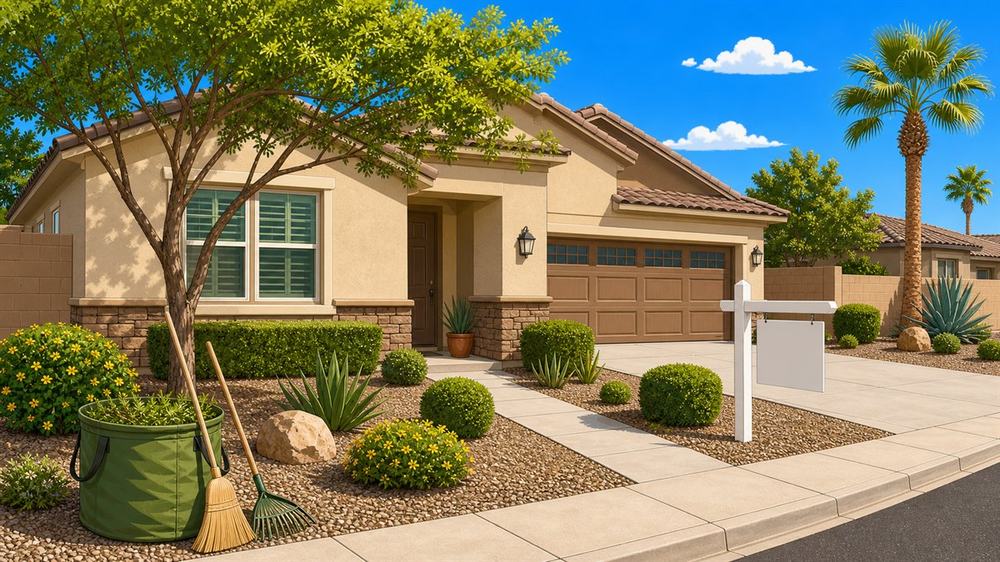
A homeowner does not always need a full landscape redesign. Removing dead shrubs, trimming the plants that still look good, adding a few desert-friendly replacements, and cleaning the rock bed can change the entire front yard. This is especially useful before selling, renting, or responding to an HOA notice.
Best time to install plants in the West Valley
Fall and spring are often friendlier planting seasons because extreme summer heat is harder on new plants. Summer plant installation can work in some cases, but it requires more careful watering and monitoring. If the yard already has irrigation problems, solve those before adding new plants.
Match the plant to the yard, not just the photo
A plant that looks good in one Phoenix yard may struggle in another if the sun exposure, irrigation, soil, or reflected heat is different. Before installing new plants, look at whether the area gets full afternoon sun, whether water reaches the root zone, and whether the plant will block walkways or windows when it matures. The best low-maintenance plant choices are the ones that fit the actual front yard or backyard conditions.
Low-maintenance still needs a clean setup
Even desert-friendly plants need enough space, clean surrounding rock, and working drip irrigation when first installed. Removing dead growth and weeds before planting helps the new plants stand out and makes the yard easier to maintain.