In Phoenix landscaping, irrigation problems show up fast
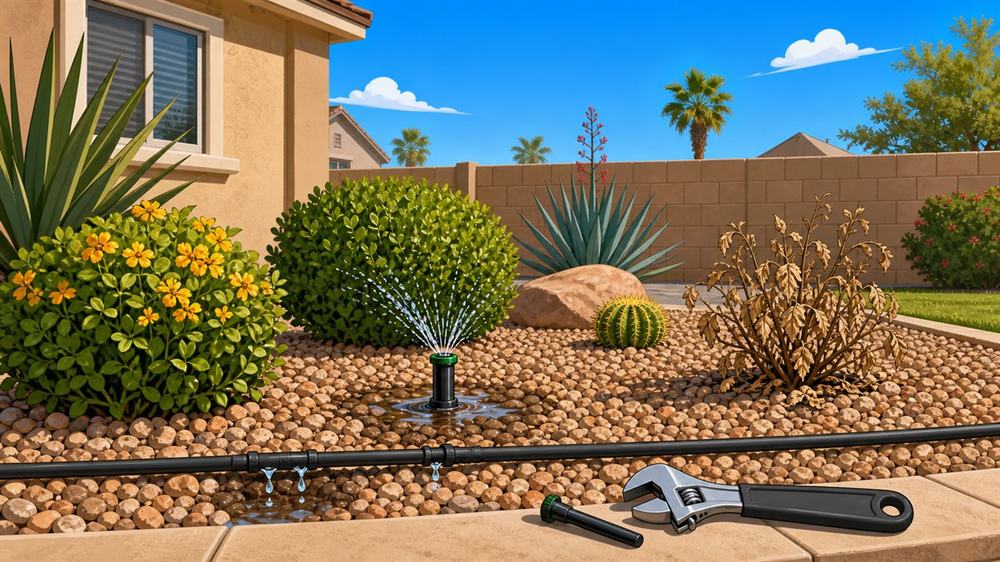
West Valley plants do not get many second chances when water stops reaching the roots. A clogged drip emitter, broken sprinkler head, damaged line, or incorrect timer can turn into brown grass, dead shrubs, stressed trees, and wasted water. Homeowners often notice the plant first, but the real problem is usually underground, at the emitter, or at the sprinkler zone.
- One plant is dry while nearby plants look fine
- A sprinkler head is spraying the sidewalk or street
- Rock is wet long after the watering cycle ends
- Grass has dry arcs or patchy corners
- The water bill jumps without an obvious reason
One dry plant is not always a plant problem
If one shrub, cactus, small tree, or new plant is struggling, it is tempting to replace it. But if the drip line is clogged, broken, buried, or disconnected, the replacement may fail too. Before spending money on new plants, homeowners should check whether water is actually reaching the root zone.
Soggy rock and curb runoff mean water is being wasted
Water pooling in decorative rock, mud around valve boxes, or runoff into the street can point to a leak, broken line, cracked fitting, or sprinkler head issue. In Glendale, Goodyear, Surprise, Buckeye, Litchfield Park, and Avondale, water waste can raise bills, damage landscaping, and create messy hardscape areas.
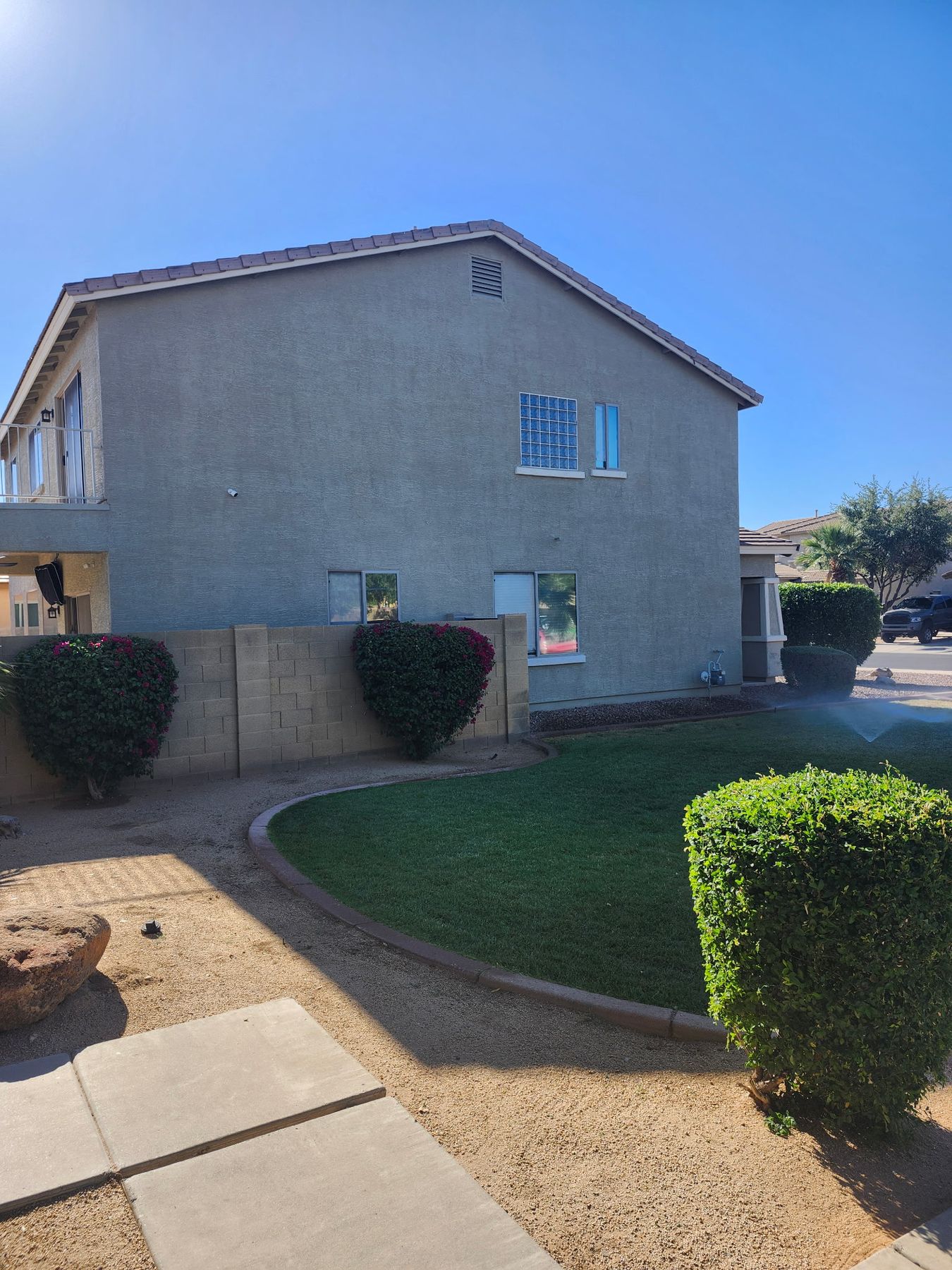
Uneven sprinkler coverage creates patchy lawns
A lawn can look diseased when the real issue is uneven watering. Sprinkler heads may be blocked by grass, aimed incorrectly, broken, too low, too high, or not reaching the corners. Before deciding on sod installation, grass reseeding, or lawn replacement, homeowners should look at sprinkler coverage and timer settings.
- Dry arcs in the grass
- Green spots near heads but brown spots farther away
- Water hitting block walls or sidewalks
- Sprinkler mist blowing away before reaching turf
- Heads that bubble instead of spray
Timers and zones should match the yard, not a guess
Phoenix irrigation timers are often set once and forgotten. But the yard changes. New plants get installed, old plants are removed, emitters clog, grass transitions, and seasonal heat changes water needs. If zones are running too long, too short, or at the wrong time, the landscape may look uneven even when the system technically turns on.
When to call for irrigation repair
Call for irrigation repair when the issue is visible, repeating, or affecting plant health. Photos of the dry plant, wet area, timer, valve box, or sprinkler zone can help a landscaper understand the issue faster. For active leaks, water running into the street, or plants declining quickly in summer heat, sooner is better.
Why irrigation repair should happen before new planting
If a shrub, tree, or lawn area is dry because water is not reaching it, adding fertilizer or new plants will not solve the real problem. A simple irrigation repair can protect the plants already in the yard and prevent a replacement plant from failing for the same reason. Homeowners in Glendale, Goodyear, Buckeye, Surprise, Litchfield Park, and Avondale should look for dry rings around emitters, cracked drip tubing, clogged sprinkler heads, and wet spots that show water is going somewhere it should not.